How to resign professionally, with a resignation letter template
By Aishwarya for the JOBSPOT 360 editorial team Published 5 min read

When and how to tell your manager, what to write in a resignation email, how to handle a counter-offer, and how to leave a handover that protects your name.
How you leave a job matters almost as much as how you do it. The way you resign affects your relieving letter, your references, your final settlement and your reputation in an industry where people move between the same companies and meet again. Resigning professionally takes a little planning and some uncomfortable conversations, but it protects you for years.
Before you resign
- Have a signed offer in hand. Do not resign on a verbal offer or an email saying "you're selected". Wait for the written offer letter, and ideally for the background check to begin.
- Know your notice period and buyout rules. Check your appointment letter and company policy. See notice periods and buyouts explained.
- Agree a realistic joining date with your new employer, allowing for your full notice period unless an early release is confirmed.
- Check your leave balance and whether it can be encashed or adjusted against your notice.
- Save your personal documents: payslips, appraisal letters, your offer and appointment letters, and TDS certificates. Do not copy any confidential company data, code or client information. That can have serious legal consequences.
Tell your manager first, in person or on a call
Your manager should hear it from you, not from HR, a colleague or a LinkedIn update. Ask for a short private meeting or call, and keep the conversation brief and positive:
"Thanks for making time. I wanted to tell you personally that I've decided to resign. I've accepted an offer that's a step forward for me in backend architecture. I've really valued working with you and the team, and I want to make sure the handover is smooth. My notice period is 60 days, so my last day would be 25 January. I'll send my formal resignation by email today."
You do not have to name your new company or share your new salary. If your manager asks why you are leaving, give an honest but positive reason, focused on what you are moving towards.
The resignation email
After the conversation, send a short formal email to your manager, copying HR if that is your company's process. Keep it factual; it becomes part of your employment record.
Subject: Resignation - Rohit Verma
Dear Anjali,
Following our conversation today, I'm writing to formally resign from my position as Software Engineer, effective today, 26 November. As per my notice period of 60 days, my last working day will be 25 January.
Thank you for the opportunities and support over the past three years. I've learned a great deal here, especially while working on the payments platform.
I'm committed to a smooth handover and will prepare a detailed transition plan this week. Please let me know if there's anything specific you'd like me to prioritise.
Regards,
Rohit Verma
Employee ID: 10482
Keep a copy of the email and the acknowledgement. It is your record of the resignation date, which decides when your notice period ends.
Handling a counter-offer
Your company may offer you more money or a promotion to stay. It is flattering and tempting, so think it through before you answer:
- Why did you start looking? If the reasons were growth, the work itself or the team, more money rarely fixes them.
- Why now? If it took a resignation to get a raise, ask yourself what that says about how your growth is managed.
- What about your new employer? Accepting a counter-offer after accepting a new offer damages your reputation with that company and with any recruiters involved.
There is no universal right answer, but decide quickly, and tell everyone affected as soon as you have decided.
Serving your notice well
The last weeks are when colleagues form their final impression of you. Keep working properly:
- Write a handover document covering your ongoing work, its status, key contacts, recurring tasks, where important files and credentials are stored (without writing the credentials themselves), known issues and pending decisions.
- Run knowledge transfer sessions with whoever is taking over, and record them if your team allows it.
- Finish what you can, and clearly reassign what you cannot.
- Stay engaged. Turning up late and checking out mentally is noticed, and it is what people remember.
Exit formalities
- Exit interview: be constructive and specific if you give feedback. It is not the place to vent.
- Return company assets: laptop, ID card, access cards and any equipment, and get a written confirmation.
- Clearance: complete the sign-offs from IT, finance, administration and your manager that your company requires.
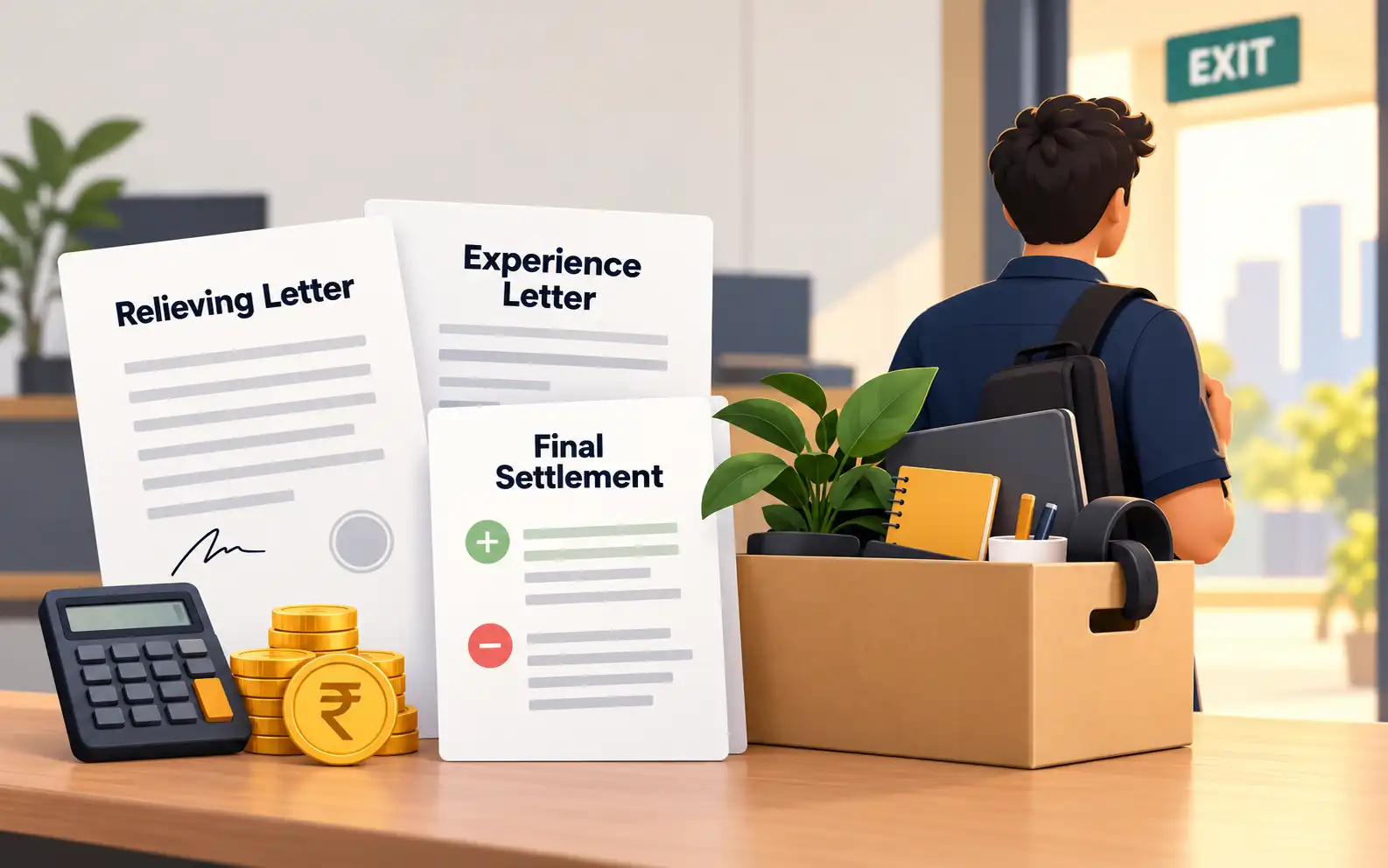
- Documents: make sure you know when you will receive your relieving letter, experience letter and final settlement.
- Provident Fund: keep your UAN details handy so your new employer can link it and your PF balance can move with you.
Our guide to relieving letters and full and final settlement explains these documents in detail.
Leave on good terms
On your last day, send a short goodbye message to your team with your personal email or LinkedIn profile. Thank the people who helped you. Wait until you have actually left, or joined your new company, before announcing the move on LinkedIn. The people you work with today will be your referees, your referrers and possibly your colleagues again.
Your new employer will verify your previous employment, so keep your documents safe. See background verification explained.