Relieving letter, experience letter and full and final settlement explained
By Ajay for the JOBSPOT 360 editorial team Published 5 min read
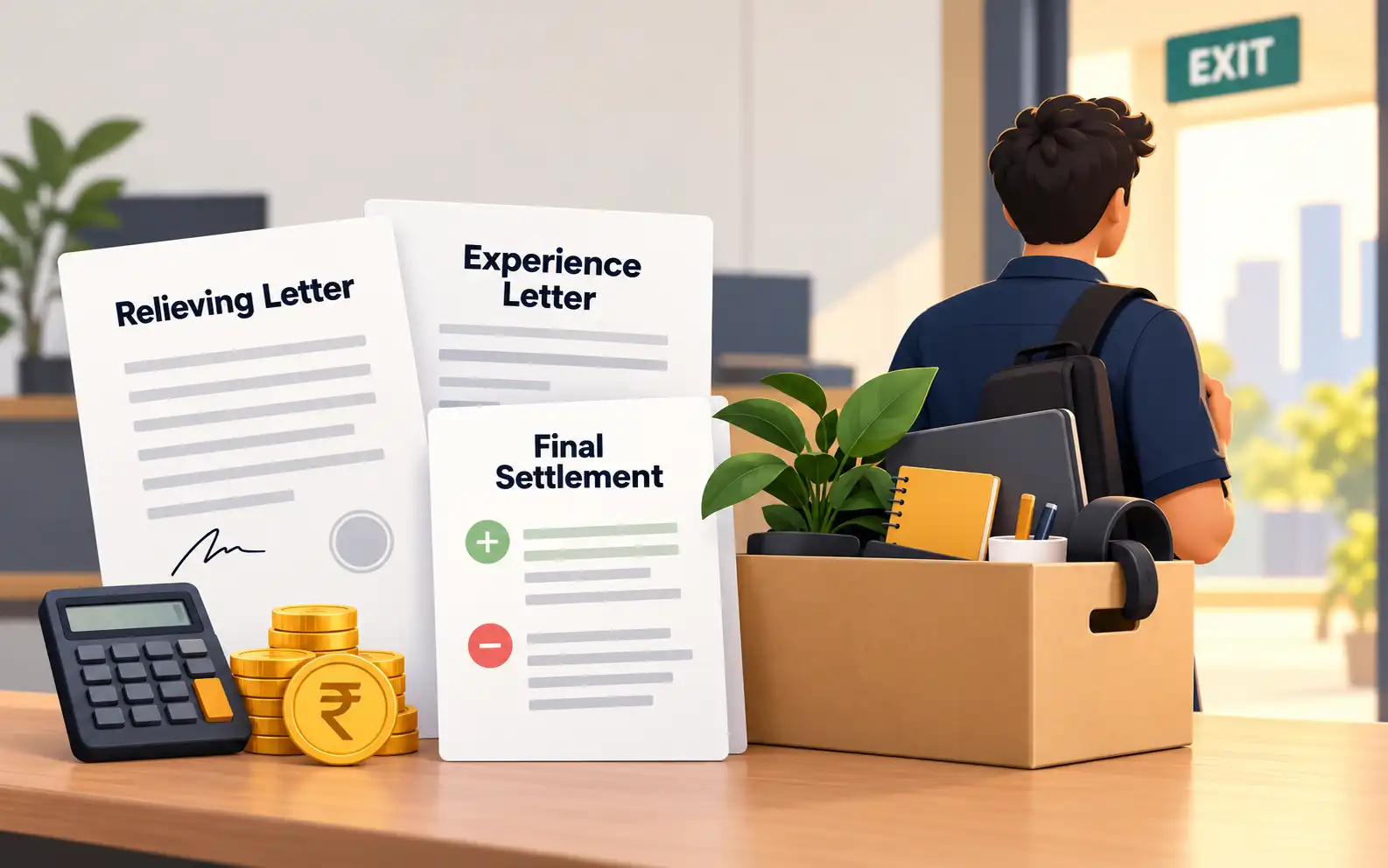
The documents you need when you leave a job, what goes into your final settlement, and what to do if your employer delays your relieving letter.
When you leave a job in India, two things matter as much as your last day: the documents you take with you and the money you are owed. Your next employer will almost certainly ask for a relieving letter during joining or background verification, and your final settlement can include a significant amount of pending pay. This guide explains what to expect and what to do if something goes wrong.
The relieving letter
A relieving letter confirms that you resigned, completed your notice period or agreed an early exit, finished the exit formalities, and have been relieved of your duties on a stated date. It is the clearest proof that you left on proper terms. New employers commonly ask for it, and some will not complete your joining without it.
You usually receive it on or shortly after your last working day, once clearance is complete. Check that your name, employee ID, designation and dates are correct.
The experience letter
An experience letter, sometimes called a service certificate, confirms your employment: your designation or designations and the dates you worked there. Some companies combine it with the relieving letter in a single document. Keep both safely, along with your offer letter, appointment letter and payslips, because background checks may ask for any of them, even years later.
Full and final settlement
Your full and final settlement, usually called F&F, is the final calculation of what the company owes you and what you owe the company. It typically includes:
What you may receive
- Salary for the days worked in your final month.
- Leave encashment for unused earned leave, according to company policy.
- Pending reimbursements, such as travel or internet expenses already claimed.
- Bonus or variable pay that is due under your contract or policy.
- Gratuity, if you have completed the qualifying period of service, which is generally five years for permanent employees.
What may be deducted
- Notice period shortfall or an agreed buyout amount.
- Recoveries, such as a joining bonus that must be repaid, a salary advance, or the cost of unreturned equipment.
- Income tax on the settlement.
Ask HR for a written F&F statement that shows each item, and check it against your payslips and leave balance.
How long does it take?
Companies have traditionally taken 30 to 60 days after your last working day to process the full settlement, tied to their payroll cycle. India's new labour codes, in force since November 2025, tighten the timelines for paying final wages, although other parts of a settlement, such as gratuity, follow their own rules, and practice is still catching up. Ask HR for the expected settlement date in writing, and keep their reply.
Taxes when you change jobs
Each employer you worked for during a financial year should give you a TDS certificate, commonly called Form 16, showing your salary and the tax deducted. When you join a new company mid-year, tell its payroll team about your salary and tax from the previous employer for the same year, using the form or declaration they provide. Otherwise, the new employer may deduct too little tax, leaving you with a bill when you file your return.
Provident Fund
Your Universal Account Number (UAN) stays the same for your whole career. Give it to your new employer so they can link your new PF account to it. Then check on the EPFO member portal that your previous balance has been transferred to the new account, which is now often handled automatically but is still worth verifying. Withdrawing your PF every time you change jobs is usually a poor choice, because it breaks the long-term savings and can have tax consequences.
If your relieving letter is delayed
Delays are common, often because of pending clearances or disputes over the settlement. Work through these steps:
- Check that you have completed every clearance: asset returns, handover sign-offs and expense settlements.
- Send a polite written reminder to HR, stating your last working day and asking when the letter will be issued.
- Escalate to the HR head or your former manager if there is no response within a week or two.
- Keep a written record of every request and reply.
- If the delay continues without good reason, especially if dues are being withheld, you can seek help from the labour department in your state or consult a lawyer about sending a legal notice.
Meanwhile, tell your new employer about the delay. Most will accept alternatives temporarily, such as your resignation acceptance email, your last payslips and your F&F statement.
A checklist for your last weeks
- Resignation email and its acknowledgement saved.
- Handover completed and confirmed in writing.
- Laptop, ID card and other assets returned, with confirmation.
- Final expense claims submitted.
- Leave balance confirmed with HR.
- Personal contact details updated with HR for documents and Form 16.
- Relieving letter, experience letter and F&F statement received and checked.
- UAN shared with your new employer.
For the steps before your last day, see how to resign professionally and notice periods and buyouts explained. Your new employer will verify these documents, as described in background verification explained.
This article is general information, not legal or tax advice. Rules and company policies vary, so check the ones that apply to you.